At a glance
The story at a glance
- A waffle sole makes the underside part of the design.
- Canvas, suede, and rubber each bring a different texture.
- The side stripe gives a simple silhouette its movement.
- Skate-focused details respond to contact with the board.
- Familiar shoe shapes leave room for personal expression.
Vans and the pleasure of a simple shoe
There is a particular kind of shoe that looks at home beside a skateboard, under a pair of straight-leg jeans, or kicked off by the door after a long day. It has a low profile, a rubber edge around the sole, and a shape that seems to belong to the foot rather than announce itself. Vans has spent decades making variations on that idea.
The appeal begins with the shoes themselves. Canvas gives some pairs the easy texture of a favorite work shirt; suede brings a softer, denser surface to others. The rubber outsole often carries the brand’s familiar waffle pattern, a grid of recessed shapes that gives the bottom of the shoe as much visual identity as the side. Add a checkerboard print, a padded collar, or the curving side stripe, and a basic silhouette becomes unmistakable.
Vans is rooted in action sports, particularly skateboarding, but its product world is broader than the skatepark. There are low-tops and high-tops, slip-ons and lace-ups, clothing and accessories. Some pieces are made with the demands of skating in mind; others carry the same visual language into ordinary daily wear. What connects them is a practical, unfussy character: these are clothes and shoes that leave room for movement, repetition, and personal interpretation.
A canvas built for living in
The most recognizable Vans shapes are remarkably spare. The Authentic is a low-top lace-up with a straightforward canvas upper and a slim silhouette. The Era follows a similarly casual line but adds a padded collar, giving the opening around the ankle a different feel and a slightly fuller appearance. Neither needs an elaborate arrangement of panels to be recognizable.
That simplicity changes how the materials read. Canvas has a woven surface that can look crisp when new and more relaxed as it creases. It is a fabric associated with utility, and on a shoe it makes a solid color feel less formal than smooth leather might. The contrast between the upper and the rubber around the sole becomes part of the design: a clear division between fabric and ground.
The Classic Slip-On takes the reduction further. With no laces to break up the upper, its broad front panel becomes a natural place for color and pattern. The checkerboard version turns that panel into a graphic statement, while the shoe’s shape remains easygoing. It is an object lesson in how a small canvas can carry a big visual idea.
These are not identical experiences on the foot. A lace-up can be adjusted across the instep; a slip-on has a different, more contained opening. The padded collar of an Era changes the feel around the ankle. Such details are modest, but they are where familiar silhouettes acquire their own personalities.
The side stripe and the high-top
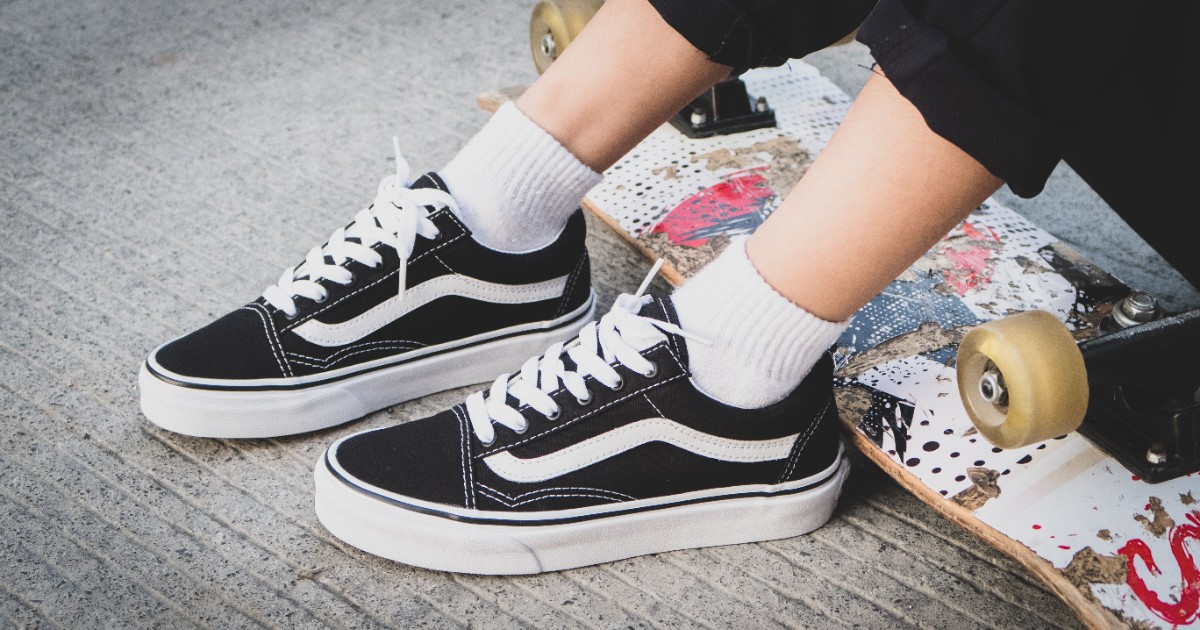
If the Authentic and Slip-On make their point through restraint, the Old Skool introduces a more elaborate line. Its side stripe sweeps across the shoe, giving the low-top a sense of movement even when it is standing still. Common versions combine canvas with suede panels, so the shoe has a visible play between woven and softly textured surfaces.
The Sk8-Hi takes a related visual language upward. Its higher collar changes the proportions of the whole outfit: the shoe is no longer just a line beneath a pant leg but a shape that can sit against the ankle or disappear partly under fabric. Laces travel farther up the foot, while the side stripe remains a recognizable feature.
The difference matters beyond appearance. A high-top and a low-top sit differently around the ankle, and the choice can be as much about sensation as silhouette. Some people like the open feeling of a low collar; others enjoy the closer contact of a higher one. Vans gives both preferences a place in the same family of designs.
The Old Skool and Sk8-Hi also show how the brand uses contrast without making a shoe visually complicated. A stripe, a change of material, a line of stitching, and the rubber edge can do plenty of work. The effect is graphic but rarely fussy, which helps explain why these shoes can sit comfortably with everything from loose skate pants to a plain pair of jeans.
What the sole tells you
Turn a Vans shoe over and the underside is likely to be as distinctive as the upper. The waffle-pattern outsole is one of the brand’s most familiar details: a repeating arrangement of shapes in rubber, designed to provide grip. On a skateboard, the relationship between shoe and board is unusually direct. The rider is not simply standing on a surface but shifting weight, turning, and feeling for position through the sole.
That helps explain the enduring appeal of a relatively low-profile skate shoe. The aim is not to make the foot feel remote from the board. It is to provide a usable connection, with rubber underfoot and a shape that allows the wearer to move. Different Vans models have different constructions and cushioning, so the experience will not be identical from one pair to another.
The rubber sidewall is visually important, too. It frames the upper, follows the curve of the toe, and gives a simple canvas shoe a sturdy-looking border. On many classic Vans styles, vulcanized construction is part of that familiar character, joining the upper and rubber sole through a heat-based process. The result is a shoe with a recognizable outline as well as a practical purpose.
The most memorable Vans details often begin where the shoe meets the ground.
That grounded quality carries into everyday wear. Even away from a board, the flat-looking profile and patterned rubber make the shoes feel connected to the pavement, the floor, and the ordinary surfaces of a day.
Skateboarding changes the details
A shoe used for skating encounters a particular kind of abrasion. Grip tape rubs against the upper; repeated foot movement puts pressure on seams and panels; landings ask something different of a sole than a quiet walk across a room. Those demands help explain why a skate-oriented shoe can look like a casual classic while hiding more specialized decisions in its construction.
Vans makes skate-focused versions of familiar silhouettes, including shoes in its Skate Classics range. Depending on the model, details can include reinforced areas and added cushioning intended for skating. The distinction matters: a classic-looking canvas shoe and a skate-specific version may share a recognizable outline without feeling or performing exactly alike.
Suede is a useful part of this conversation. Its textured surface gives a shoe visual depth, but it is also a material commonly used in skate footwear where the upper takes repeated contact. Panels around the toe and sides can give a designer places to consider that wear. Stitching, overlays, and the shape of the upper all contribute to how a shoe is put together; they are not merely decoration.
None of this requires treating every pair as equipment for a trick. The same design language has an everyday appeal. But knowing what skating asks of a shoe makes the details more interesting. A reinforced panel is a response to a real point of contact. A rubber sole is not just a color contrast. The visual identity grows out of a physical activity.
The quiet work of construction
Look closely at a Vans low-top and the design starts to separate into parts: the upper wrapping over the foot, the stitched edges of individual panels, the eyelets, the laces, the collar, and the rubber around the bottom. The pleasure is partly in how plainly those parts are presented. A line of stitching can outline the toe; a contrasting stripe can clarify the side; a padded collar can soften the geometry at the opening.
Different materials change the mood of the same basic shoe. Canvas tends to look light and informal. Suede adds a richer, more matte texture. Leather versions have a smoother surface and a different visual weight. When materials are combined, their edges create rhythm: a suede toe against a canvas side panel, for example, gives the eye more to follow than a single uninterrupted surface.
Color has a similar effect. A dark upper with a light sole emphasizes the shoe’s outline. A checkerboard print makes the upper itself the focus. A single color lets the shape and stitching take over. Because many Vans silhouettes are relatively simple, these shifts can feel substantial without changing the underlying design.
There is no need to imagine a secret process behind every pair. The craftsmanship is legible in ordinary decisions about material, construction, and proportion. The shoe’s character comes from how those decisions meet: soft fabric against rubber, an arcing stripe against a straight sole, or a high collar balanced by a familiar low-profile base.
Clothing with the same easy rhythm
Vans is not only a footwear label. Its clothing and accessories extend the same casual, skate-informed vocabulary into pieces that can be worn without much ceremony. T-shirts, sweatshirts, pants, jackets, hats, and bags belong to a product world built around movement and everyday repetition.
The relationship between shoes and clothing is often one of proportion. A low-top leaves a clean line below a cropped or rolled pant leg. A high-top can create a more substantial shape at the ankle. A roomy sweatshirt or a relaxed pair of pants echoes the easy attitude of a skate shoe, but the combination does not need to look like a uniform.
Graphics are part of that world as well. Checkerboard, logos, and bold prints can give a plain outfit a focal point, while quieter pieces let texture and silhouette do the talking. A black-and-white pattern has a different energy from a solid canvas upper, even when both appear on the same basic shoe shape.
Accessories complete the picture in practical ways. A cap changes how an outfit frames the face; a bag gives the day’s small necessities somewhere to go. These are familiar objects rather than dramatic statements. Their connection to Vans comes through the same mix of utility, casual shape, and graphic confidence that appears in the footwear.
A familiar shape, made personal
One reason Vans has remained visually adaptable is that its shoes leave space for the wearer. A plain low-top can recede into an outfit; a bright Slip-On can become its central feature. A scuffed pair of skate shoes tells a different visual story from a clean pair worn with tailored pants, even if the underlying silhouette is familiar.
Vans Customs makes that openness more explicit. The customization experience invites people to work with the brand’s recognizable shapes and make choices about their appearance. The appeal is not that a shoe stops being a Vans shoe. It is that a known outline becomes a framework for a more personal combination of colors, patterns, and details.
That distinction is useful. The checkerboard, side stripe, and waffle sole are strong enough to anchor a design, but they do not dictate a single way to wear it. The shoes can belong to a skater who cares about contact with the board, someone drawn to the graphic simplicity of a Slip-On, or a person who simply likes the look of canvas and rubber together.
Personal style often works through repetition rather than novelty: the same favorite shape worn with different clothes, or the same pair picking up the creases of daily life. Vans has a place in that kind of wardrobe because its most familiar designs can absorb those changes without losing their identity.
From the skatepark to the sidewalk
The distance between a skatepark and an ordinary sidewalk is smaller than it might seem. Both are places where shoes meet rough surfaces, where comfort is noticed through hours of wear, and where personal style is assembled from practical things. Vans sits in that overlap. Its connection to skating gives its designs a reason for being; their clear shapes allow them to travel well beyond the activity.
There is also something democratic about the visual language. A side stripe is easy to recognize without requiring an elaborate explanation. Checkerboard is playful enough to stand on its own. Canvas and rubber are everyday materials, made expressive through proportion and pattern. The shoes can look at ease with worn denim, wide pants, shorts, or a dress because they do not insist on one polished finish.
That does not make every model interchangeable. The open ankle of an Authentic, the padded collar of an Era, the laceless front of a Slip-On, and the taller line of a Sk8-Hi each offer a distinct encounter with the foot and the outfit around it. The more closely you look, the more the differences matter.
Vans’ strongest idea may be this balance between recognition and room to move. The shapes are familiar, but they are not fixed to one kind of person or one kind of day. A waffle sole meets the pavement; a checkerboard panel catches the eye; the rest is left to the wearer.
A few questions, answered
6 answersWhat is Vans known for?
Vans is known for skate-inspired footwear, especially its canvas low-tops, checkerboard Slip-Ons, side-striped Old Skool shoes, and Sk8-Hi high-tops. The brand also makes clothing and accessories.
How do the Authentic and Era differ?
The Authentic has a simple low-top lace-up shape, while the Era adds a padded collar around the ankle. Both are closely associated with Vans' casual canvas footwear.
What is the difference between the Old Skool and Sk8-Hi?
The Old Skool is a low-top, while the Sk8-Hi has a higher collar around the ankle. Both are associated with the brand's side stripe and come in different material and color combinations.
Why do Vans shoes have waffle-pattern soles?
The waffle pattern is a recognizable arrangement of shapes in the rubber outsole. It is designed to provide grip, a useful quality for skateboarding and everyday movement.
Are Vans shoes made for skateboarding?
Some Vans shoes are made specifically with skating in mind. Skate-focused models can include reinforced areas and additional cushioning, though details vary by model.
What is Vans Customs?
Vans Customs is the brand's customization experience, allowing people to personalize the appearance of recognizable Vans shoe shapes.